Groq raises $650 million and shifts from chips to an inference platform
Groq raises $650 million in a new funding round and announces a change in its core strategy. Instead of focusing exclusively on developing AI chips, the company
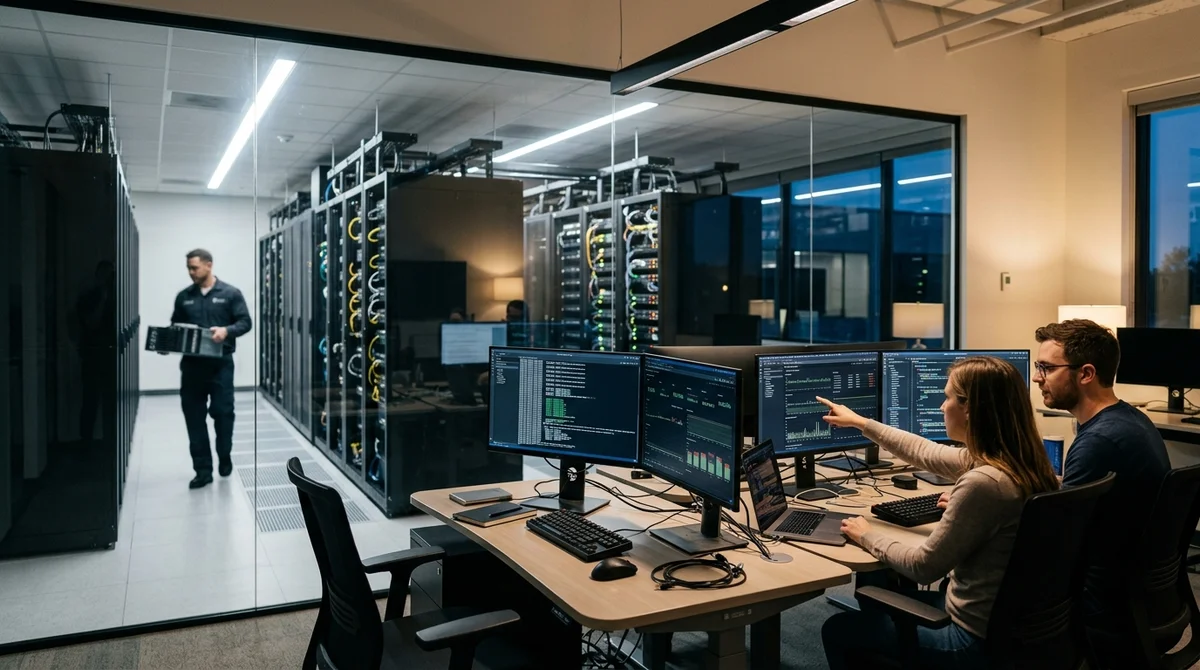
Startup Groq is attracting $650 million in a new funding round and announcing a shift in its core development strategy. The company is transitioning from developing specialized AI chips to creating a comprehensive platform for optimizing critical AI inference — the process where a trained model processes real user queries at maximum speed and minimum latency.
Funding round at the crossroads
According to Axios, Groq is conducting an internal funding round of $650 million. This capital will help the company radically restructure its business model and shift the primary focus of development from hardware to software and cloud services for inference optimization. This is a significant funding round that reflects serious strategic ambitions in a market where competition between innovative startups and chip giants like Nvidia is rapidly intensifying.
Financing arrives at a time of growing demand. Companies deploying large language models and other AI systems urgently need affordable, fast, and reliable inference. Cloud providers like AWS and Google Cloud are seeking ways to reduce the cost of AI infrastructure maintenance. Groq sees in this an enormous and growing market that will only expand.
Why inference matters more than chip design
Inference is a critically important final step in the life of any AI model. After a model is trained in a developer's data center, it must be deployed to quickly process user queries. This task is significantly more complex than simply creating a high-performance general-purpose chip. It requires optimizing response speed in milliseconds, reducing power consumption at massive scales (when the system processes millions of requests daily), ensuring reliability and scalability, and handling various model sizes and architectures.
Groq believes that its engineering prowess and deep understanding of neural network architecture can be better applied here than competing directly with Nvidia in the race for ultra-fast accelerators for model training. The company plans to offer:
- High-speed inference on specialized chips of its own design
- Software stack for managing load across distributed data centers
- Optimization and scaling for various model sizes and architectures
- Integration with leading cloud platforms (AWS, Google Cloud, Azure)
- Open API for simple integration into production systems of clients
Context: Nvidia's refusal and the path to independence
This announcement comes following news (already mentioned in the headline) that Nvidia declined to acquire Groq in an acquisition. The competitive pressure on the young startup was extreme: Nvidia, possessing de facto monopoly over dominant GPU chips like the H100 and the newly released H200, concluded that acquiring Groq's engineering team would not add sufficient strategic value to its portfolio. For investors, this was a clear signal that even top technology players view Groq as a competitor, not as an acquirable asset.
By now raising $650 million, Groq demonstrates that it can develop independently and build its own competitive business in a niche that is becoming strategically increasingly important to the entire industry.
What this means for the industry
For innovative companies in AI infrastructure, this is a clear signal: specialization in inference is becoming a standalone, highly profitable direction with its own logic and economics. Groq is not attempting to defeat Nvidia in the race for the fastest training accelerators, but is focused on where it can add the most value — scaling deployed models.
For consumer companies like OpenAI, Anthropic, Mistral AI, and other API providers, this means expansion of choice in engineering infrastructure. They will be able to choose between multiple inference providers instead of relying entirely on Nvidia's monopoly offering.
Хотите не читать про ИИ, а внедрить его?
«AI News» — это полезные новости из мира ИИ. Системно научиться работать с нейросетями и применять их в работе — в Hamidun Academy.