AI Griefers Create Thousands of Fake Influencers for Dropshipping on TikTok
AI-generated influencer accounts are proliferating on TikTok and Facebook, selling products through dropshipping. Scammers use tearful videos and racial…
AI-processed from The Verge; edited by Hamidun News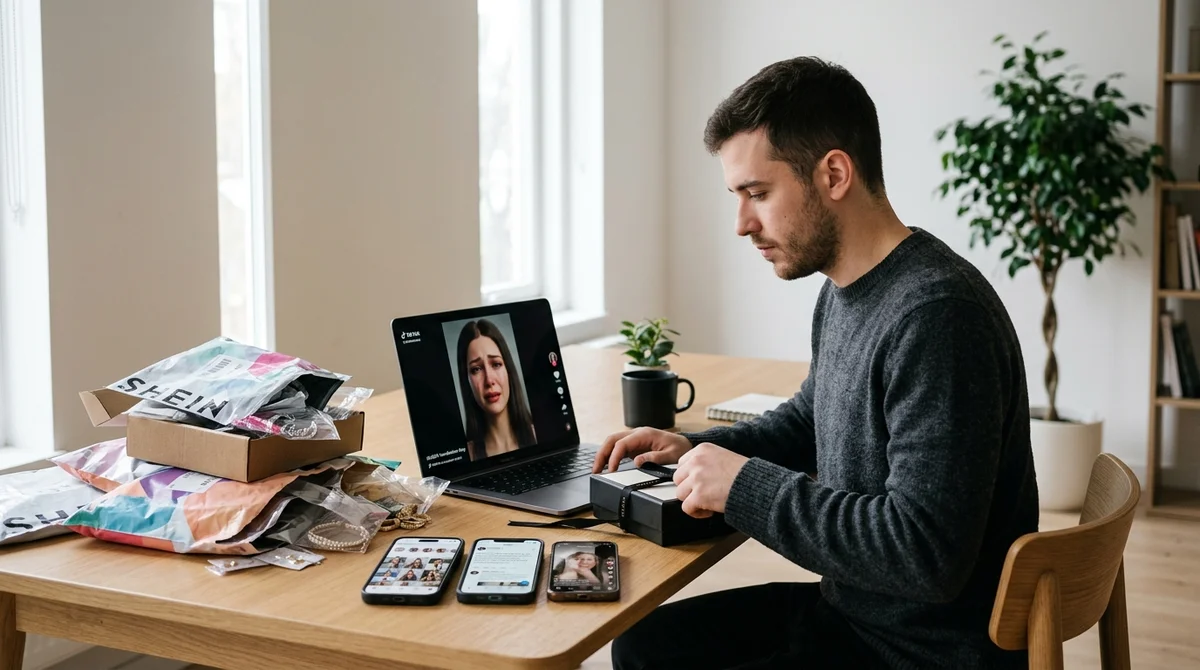
Since late 2025, accounts of AI-generated influencers have been proliferating on TikTok, Facebook, and Instagram, purporting to be real people selling handmade goods. In reality, it's a large-scale fraud operation: products from Shein, Amazon, and other marketplaces are repackaged in attractive boxes and passed off as original items from small businesses.
How the Scam Works in Detail
Here's a specific example. On TikTok, there's an account @aliyahsbuckles.store.
The character is named Aliyah—a light-skinned African American woman wearing Western-style clothing. In a viral video (March 2026), she sits in front of the camera crying, pleading with viewers to watch her video and save her belt buckle business: "Even as a black woman, I have more faith that white women will stay 13 seconds on this video to save my belt buckle business," reads the text overlaid on the video. Aliyah wipes tears from her cheek, her eyes glistening.
But Aliyah doesn't exist in reality. Her face, expression, tears—all of it is generated by a neural network. The buckles she allegedly handcrafts in her workshop are standard Chinese blanks from mass production, which the scammer bought wholesale for pennies on Alibaba or Shein.
The Scale of the Scam: Thousands of Accounts
This is not an isolated case. Such accounts are numerous. According to The Verge, thousands of similar influencers are currently operating on TikTok, Facebook, and Instagram. Each tells a variation of the same story: I'm a small business, I'm desperate, help me, check out my products.
Scammers choose this scheme because it works. The strategy relies on several psychological traps:
- Emotional manipulation — tearful videos, stories of desperation, pleas for help trigger empathy and lower critical perception
- Use of racial stereotypes — images of Black women, immigrants, and people in financial hardship in Western culture are often associated with "authentic small business" and trigger the desire to support them
- Platform naivety — TikTok and Facebook algorithms are optimized for engagement, not for detecting scams
- Speed of repackaging — products arrive at minimal cost, are repackaged in attractive boxes, and resold at 5-10 times the price
Why Platforms Can't Keep Up
TikTok, Facebook, and Instagram rely primarily on automated moderation and user reports. But such accounts often quickly accumulate followers and sales before they are noticed. Additionally, identifying AI-generated faces is becoming increasingly difficult: modern neural networks generate realistic images that are hard to distinguish from photos of real people.
What This Means for the Future
Generative AI opens up a new class of fraud that was previously impossible at this scale. Now you can automate everything: create 10,000 AI influencers, upload different videos, use different platforms, and wait for some of them to work before they get banned. For consumers, this means one thing: be more careful with supposedly "authentic" stories on social media, especially if the story is too perfect or emotionally manipulative.
*Meta has been recognized as an extremist organization and is banned in Russia.
Want to stop reading about AI and start using it?
AI News is a curated feed of AI/tech news. Hamidun Academy teaches you to use AI systematically in your work.