NBA Plans to Implement AI for Automatic Out-of-Bounds Ball Detection
NBA will implement an AI system for automatic out-of-bounds ball detection. League Commissioner Adam Silver compared the approach to Hawk-Eye, the technology…
AI-processed from AI News; edited by Hamidun News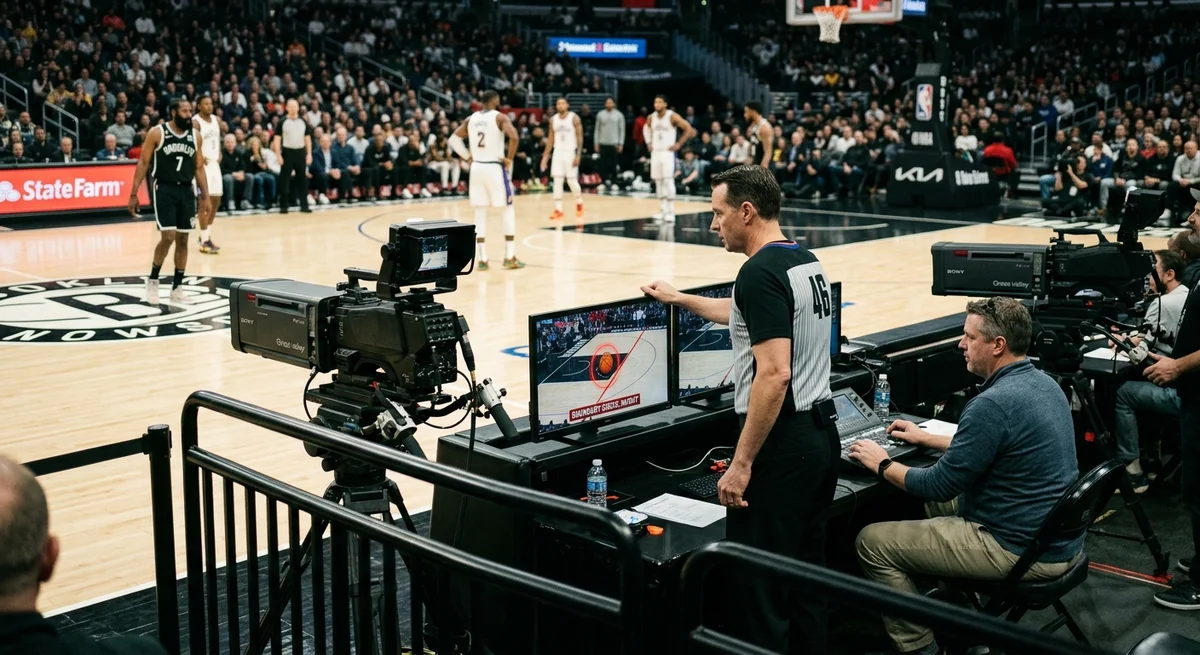
NBA plans to implement an automated system for refereeing decisions, including out-of-bounds determination — when the ball is outside the playing court. League Commissioner Adam Silver announced an ambitious plan that should increase the objectivity of refereeing and reduce the impact of human error.
Hawk-Eye in Basketball
Silver cited the Hawk-Eye system, which has been used for over a decade in professional tennis to determine line calls. The league will apply a similar approach in basketball, adapting the technology to the peculiarities of the game. The system will use a network of high-precision cameras installed around the court's perimeter and artificial intelligence to analyze the ball's position in real time. This approach allows for the elimination of subjectivity and ensures maximum accuracy in refereeing decisions.
How the System Works
The technology is based on computer vision and neural networks. Cameras capture every moment of play at high frame rates, allowing AI to analyze the ball's position with millimeter-level precision. The system determines whether the court's boundary has been crossed and transmits the decision to referees through a special notification system. Processing occurs almost instantaneously — the referee sees the result within a few seconds. This saves time and makes the game more dynamic than long pauses for discussing controversial moments.
- Multi-angle video surveillance from different perspectives
- Real-time analysis (200+ fps)
- Court boundary determination with millimeter-level precision
- Automatic referee notification
- Decision-making speed under 2 seconds
Beyond Out-of-Bounds
Silver hinted that the system could be applied not only for out-of-bounds determination. In the future, AI could assist in analyzing other controversial situations: ball touches on the free throw line, double dribble determination, or defensive contact. The league is testing the system gradually, implementing it at various levels of basketball — from university games to the professional league. This allows for data collection, model training, and verification that the system works reliably in different conditions.
Implementation Challenges
Not everyone supports the plan. Critics point out that in tense moments of the game, even thousandths of a second matter, and the algorithm must work flawlessly. Additionally, the NBA will need to retrain referees who have relied on intuition and experience throughout their careers.
"This is an initial stage of development, not a final product,"
Silver acknowledged.
The system will be refined based on actual games.
What This Means
Professional sports are at a turning point: refereeing methods are gradually giving way to AI technologies. We've seen this in football (VAR), in tennis (Hawk-Eye), and now in basketball. NBA is not simply trying to avoid high-profile errors — the league is striving to increase the game's spectacle by eliminating long pauses for discussing controversial moments. For viewers, this means more dynamic basketball; for players, more predictable and fair decisions; for the league, more trust and fewer scandals.
Want to stop reading about AI and start using it?
AI News is a curated feed of AI/tech news. Hamidun Academy teaches you to use AI systematically in your work.