Why South Africa, Controlling 88% of Platinum, Loses Leverage in AI Negotiations
South Africa owns 88% of the world's platinum, critical for AI semiconductors, and Africa's largest data center market. Microsoft and Huawei are competing for i
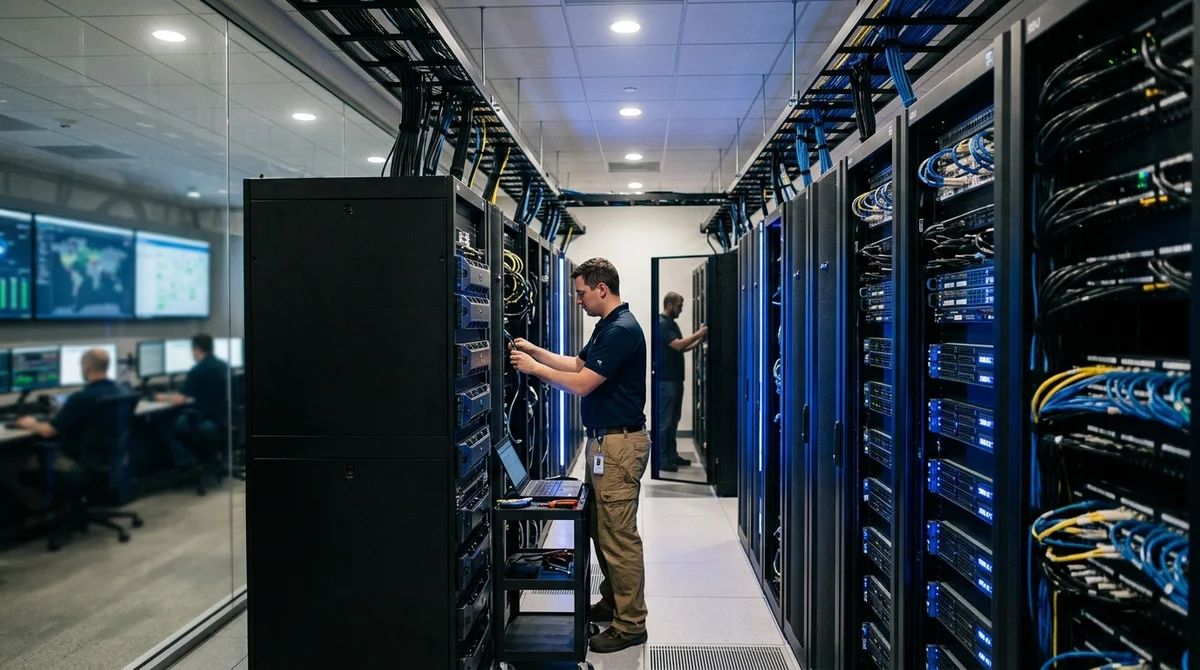
South Africa holds 88% of the world's platinum reserves — a metal essential for modern semiconductors and AI data centers. Yet its artificial intelligence governance policy fails to leverage this critical strategic advantage.
Platinum as
South Africa's Leverage — An Exception Among Developing Countries
Platinum from the Bushveld Complex deposit goes into semiconductors and data centers that power all of the world's AI infrastructure. This gives South Africa negotiating power that no other African nation possesses. Add to this the continent's largest data center market (valued at $2.
16 billion) and existing partnerships with Microsoft, Google, AWS, Oracle — and you get a rare combination: critical resources plus hyperscaler infrastructure presence. A properly formulated policy could turn this into a negotiation tool. But the draft AI policy, withdrawn in April, ignored all these cards.
Instead of demands for data sovereignty and technology transfer — empty "OPTION" fields in the most critical parts of the document. Instead of minimum conditions for foreign investment — nothing. The policy treated South Africa as an AI consumer, not as a country with influence over global infrastructure.
The Price of Choice: Huawei or Microsoft
Against the backdrop of the withdrawn policy, a real battle for continental infrastructure control is unfolding. Huawei offers a package of DeepSeek LLM plus the company's cloud infrastructure — with price discounts up to 90% against standard rates. Attractive, but with a catch: data is stored on infrastructure potentially accessible to Chinese authorities under Chinese law.
Documentarily, this has already occurred with Huawei's Safe Cities networks across Africa. Microsoft announced $300 million in investments in cloud and AI solutions by 2027. Google, AWS, and Oracle already hold cloud regions on the territory.
This is computing power, but with complete API dependency on American companies, closed models, and terms that South Africa did not negotiate.
- Minimum investment requirements above $30 million
- Mandatory reporting on computational resource usage
- Requirements for technology transfer and local development
- National guarantees for data protection and sovereignty
This is the only path to genuine sovereignty, but it requires tough negotiations, not reliance on the goodwill of hyperscalers.
Systemic Error in Governance
In April, the communications minister withdrew the draft when journalists discovered AI hallucinations in the text — fictitious sources inserted by a neural network. The incident itself revealed a deep systemic problem: the government adopted a critical document without a verification process, forgetting about basic source verification before publication. This is not just a political failure.
It is a sign that the state lacks an "AI-assurance" layer — a system for verifying what components are used in AI solutions before their deployment. If the government cannot verify its own policy, it is unlikely to be able to verify AI systems during procurement, deployment, and regulation. A new independent commission must rework the policy.
Its composition is encouraging: professionals in machine learning and data regulation from Witwatersrand and CSIR institutions. But there are no deadlines, and no schedule for the revised draft. Meanwhile, South Africa remains without a formal AI policy at precisely the critical moment of geopolitical choice.
What This Means
South Africa is a global test case. If it negotiates conditions (data control, technology transfer, reporting on capacity) as mandatory requirements for investment, a model for the African continent will emerge. If it allows investment to proceed under standard commercial terms, it normalizes an extractive model across Africa. Platinum becomes an instrument of sovereignty or remains merely raw material. The window is closing.