South Korean startup XCENA raised $135M, betting on memory over computing power
South Korean startup XCENA raised $135M at a $570M valuation. The company disputes industry consensus: the bottleneck in modern AI is not computational power an
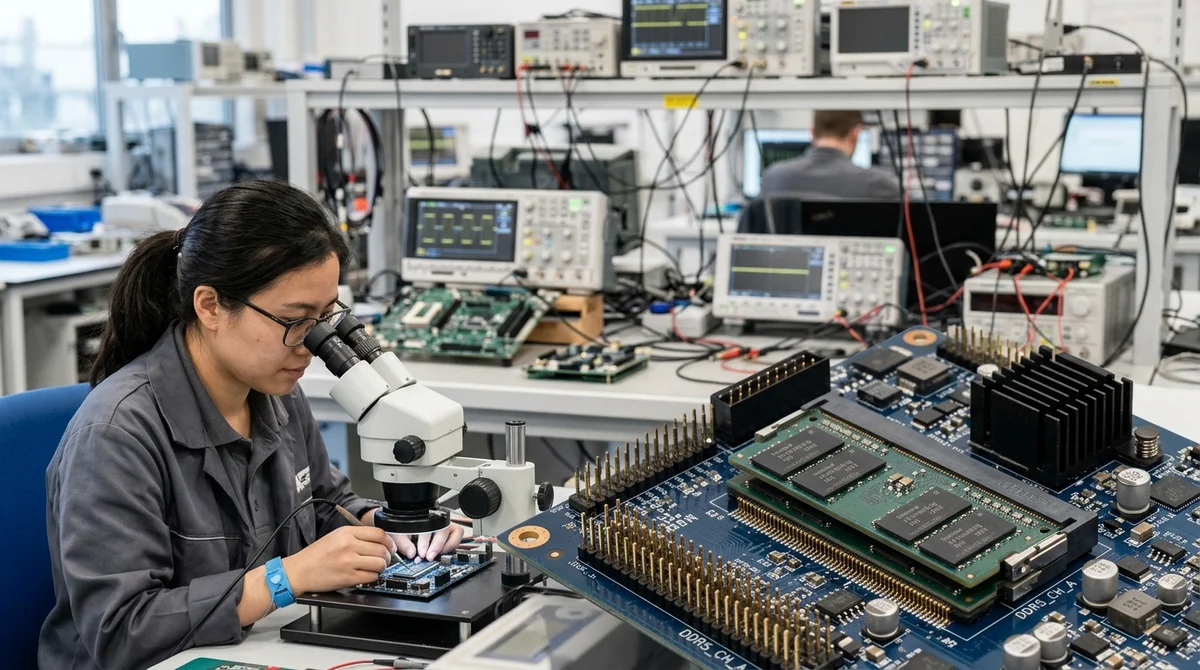
South Korean chip startup XCENA raised $135 million in investments at a $570 million valuation. The company is betting on a counterintuitive thesis: the bottleneck in modern AI development is not GPU computational power, but memory access speed.
Everyone sees the problem, but not everyone understands its true cause
The industry has been obsessed with GPU shortages for the past two years. Every day brings news of computational power shortages, chip wars, and purchase restrictions. XCENA looks at the same problem, but sees it differently. By their logic, even if you give a model the most powerful chip in the world, it will spend enormous amounts of time simply waiting for the necessary data to travel from memory to the computational core. This phenomenon, known as memory bottleneck, drags on performance far more severely than many realize.
Modern GPU architecture confirms this. The computational core is capable of performing operations in nanoseconds. Memory access? Often that's billions of nanoseconds of waiting. The paradox emerges: the processor is ready to compute, but is forced to wait for data to arrive.
The problem grows with model size and complexity
The problem worsens exponentially. When training a trillion-parameter model, the volume of data that needs to be moved between memory and processor becomes simply astronomical. Memory cannot keep up with the stream of requests.
- Each doubling of model parameters exponentially increases memory requirements
- Memory access time grows nonlinearly with increasing volume
- Energy consumption for moving data exceeds energy consumption of the computations themselves
- Even cutting-edge GPUs operate at 30-50% of their potential due to memory waits
Engineers at major laboratories are already seeing this problem in practice. When training GPT-scale models, a significant portion of processor time is spent waiting for necessary data, rather than on the computations themselves.
What XCENA is betting on
The startup is developing specialized memory architectures that promise to reduce access latency and increase bandwidth. If the approach works, it could provide enormous competitive advantage to laboratories and companies training large models. $135 million in investments from serious venture capital funds means the industry is beginning to believe in this thesis. This can also suggest that some major researchers and model developers have already encountered this problem firsthand and are actively seeking solutions.
What this means for the future of AI
If XCENA is right, the architecture of next-generation AI infrastructure will look different. Instead of just a race for increasingly powerful GPUs, there will be a parallel and equally intense race for faster memory access speed. This could significantly redefine which companies and laboratories can afford to train the next generation of models. Perhaps XCENA is wrong in its analysis, and the main bottleneck truly is computation. But the fact that the startup managed to attract such sums based on this vision suggests something: skepticism is beginning to give way to serious study of memory as a critical constraint on AI progress.