AI Is Leaving the Cloud: Dell on Hybrid Infrastructure of the Future
At Dell Tech World 2026, the transition to hybrid infrastructure for AI was a central theme. Cloud costs are rising, data sovereignty requirements are…
AI-processed from ZDNet AI; edited by Hamidun News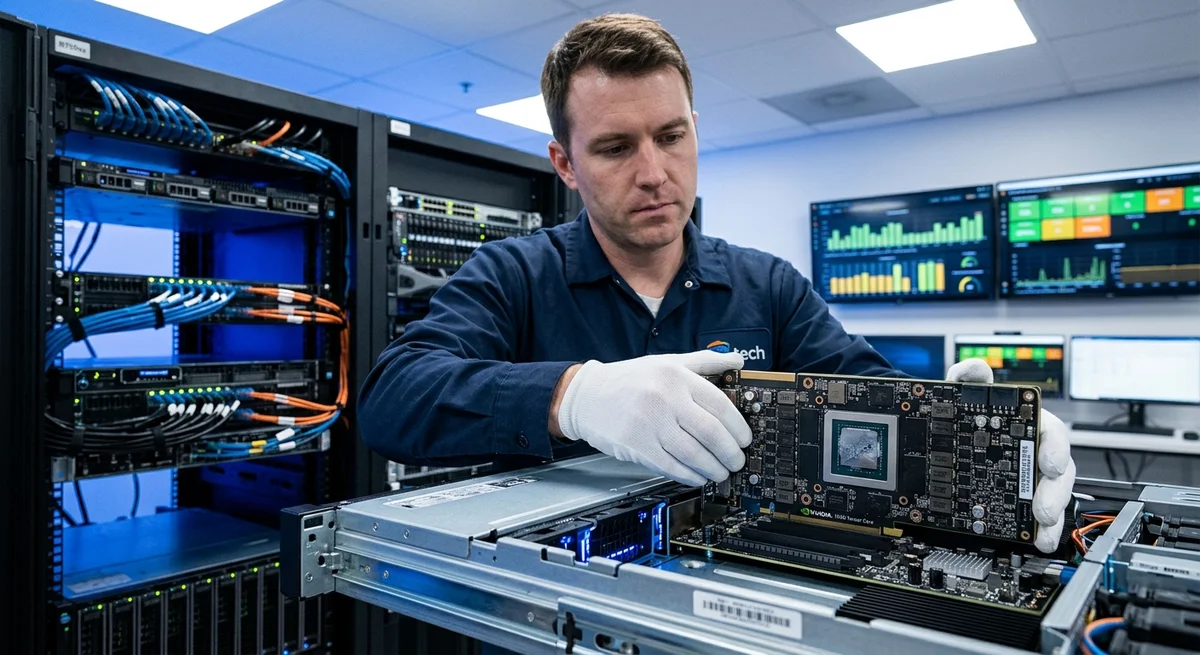
At the Dell Tech World 2026 conference, the main trend was clear: companies benefit more from keeping AI workloads on their own servers. Cloud services are becoming more expensive, data sovereignty requirements are increasing, and AI agents require minimal latency. This marks the end of the 'everything to the cloud' era—the beginning of hybrid infrastructure.
Cloud Costs Have Become Unaffordable
Cloud providers have raised compute prices and continue to do so. A company that launched its first LLM in the cloud a year ago now sees bills 2–3 times higher. For a large enterprise user, this translates to annual costs in the tens or hundreds of millions of dollars—a sum that simply cannot be ignored in the budget.
At such sums, hybrid infrastructure becomes a matter of survival. GPU computing on own servers costs less in the long term if volume is sufficient. And large companies always have sufficient volume: they constantly train new models, feed corporate data into them, and experiment.
Dell recommends calculating the payback period at 18–24 months. If a company actively uses AI, its own data center will pay for itself and begin saving money. If not, cloud remains more flexible. But for most large companies, the threshold has already been crossed: they are transitioning to hybrid.
Data Doesn't Go to the Cloud If It Legally Can't
Regulation is increasing. In Europe, GDPR; in Russia, localization requirements; in China, national security demands control over everything. In the US, CCPA is gaining strength.
Cloud often doesn't fit—data must remain physically in a single jurisdiction, with no copies in another country. Own infrastructure solves the problem head-on: servers in your own country, data under complete control, audits simplified. This becomes a competitive advantage for companies in regulated markets—financial institutions, pharmaceutical companies, state-owned enterprises.
- Data localization by law
- Control over encryption and keys
- Auditing and compliance are simplified
- No dependency on cloud providers
- Backups in the required jurisdiction
AI Agents Can't Wait for the Cloud
Cloud adds latency—tens of milliseconds per request. Imperceptible to a browser, but fatal to an AI agent. An agent that makes hundreds of decisions per second begins to operate slower, consuming more tokens, becoming more expensive.
On own servers, within a single local network, latency is measured in microseconds. AI agents can respond in real time, handling critical operations—financial transactions, logistics, quality control in manufacturing. This is especially important when agents work on multi-step tasks where each step depends on the previous one's result. A 50 ms latency multiplied by 100 steps is 5 seconds of waiting. Users are frustrated, costs increase.
What This Means
The cloud won't disappear. It will remain for load buffering, handling spikes, experimenting with new models, and development environments. But companies will move primary AI workloads to hybrid infrastructures.
This is good news for those with hardware budgets (large corporations) and a challenge for cloud providers, who are losing margin. For startups, the cloud remains a wise choice until scaling—they lack funds for their own data centers.
Want to stop reading about AI and start using it?
AI News is a curated feed of AI/tech news. Hamidun Academy teaches you to use AI systematically in your work.