Hassabis Announces the Beginning of the Singularity Era at Google I/O
At Google I/O, DeepMind head Demis Hassabis announced that we stand at the 'foothills of singularity' — approaching a moment when artificial intelligence…
AI-processed from MIT Technology Review; edited by Hamidun News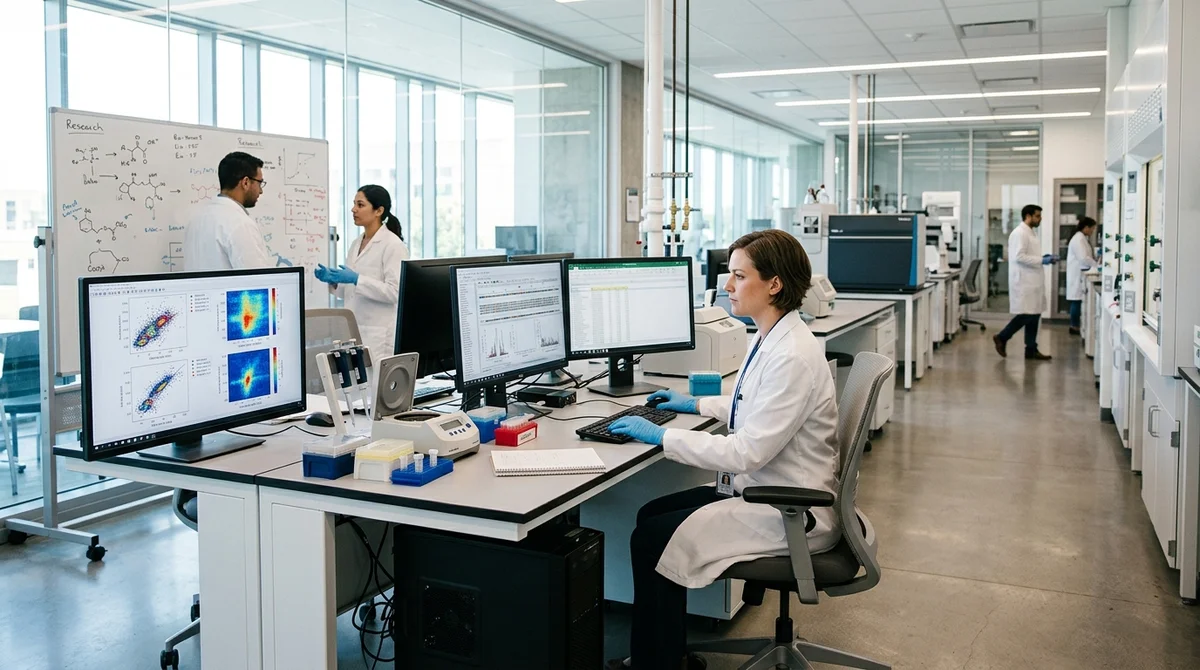
At Google I/O conference, Demis Hassabis, head of Google DeepMind, made a bold statement: humanity is at the 'foothills of singularity'. This refers to a theoretical moment in the future when artificial intelligence will rapidly surpass human intelligence and fundamentally transform the world.
What Lies Behind the Word 'Singularity'
Singularity in the context of AI means a point beyond which the development of intelligence becomes so rapid and unpredictable that its consequences cannot be calculated in advance. Hassabis is not saying that this moment will arrive tomorrow, but he argues that we are already seeing the first signs of its approach. The statement from the head of one of the world's leading AI companies is important because Google is far from the only organization thinking about radical change. OpenAI, Anthropic, Meta, and other research laboratories are watching daily as the capabilities of modern language models grow rapidly. Competition in this field is a race toward the tipping point.
A Shift in the Scientific Approach to AI
What Hassabis emphasized at I/O is not simply a warning about the future, but an indication of a paradigm shift in AI science right here and now. Instead of narrow specialization on individual tasks (object recognition, text processing, games), the company and its competitors are focused on creating more general systems capable of multitasking. These new systems are distinguished by a key ability — they learn and adapt in real time.
Google DeepMind is investing in the following areas:
- Universal models that generate new hypotheses in science
- Accelerating solutions to problems in physics, biology, and materials science
- Systems capable of autonomous learning and self-correction
- Integration of AI with laboratory equipment for automated discoveries
The company is particularly active in using AI as an assistant to scientists. This is not merely about data processing, but about proposing fundamentally new solution paths that a human researcher would not have conceived of in months of calculations.
Risks and Opportunities
The topic of singularity always sparks heated debates. Optimists see in the development of AI a path to solving global challenges: climate crisis, incurable diseases, energy shortage. Skeptics rightly warn about the risks of losing control over powerful systems and their possible use for dangerous purposes.
Hassabis's statement at Google I/O is both a realistic assessment of the current trend and a provocation for more serious discussion. If breakthrough moments in AI are indeed approaching, preparation should begin not tomorrow, but today: legislative, technical, and ethical.
What This Means
The words of the DeepMind head signal that the global race for AI leadership is no longer simply a competition in model performance and accuracy, but a race toward a turning point. For science, business, and society, this means one thing: the time for preparation and adaptation is over, it's time to start acting.
*Meta has been recognized as an extremist organization and is banned in Russia.
Want to stop reading about AI and start using it?
AI News is a curated feed of AI/tech news. Hamidun Academy teaches you to use AI systematically in your work.