DeepMind Presented Co-Scientist — Multi-Agent AI for Accelerating Scientific Research
DeepMind released Co-Scientist — a multi-agent AI assistant based on Gemini for accelerating scientific research. The system generates and develops hypotheses,
AI-processed from DeepMind Blog; edited by Hamidun News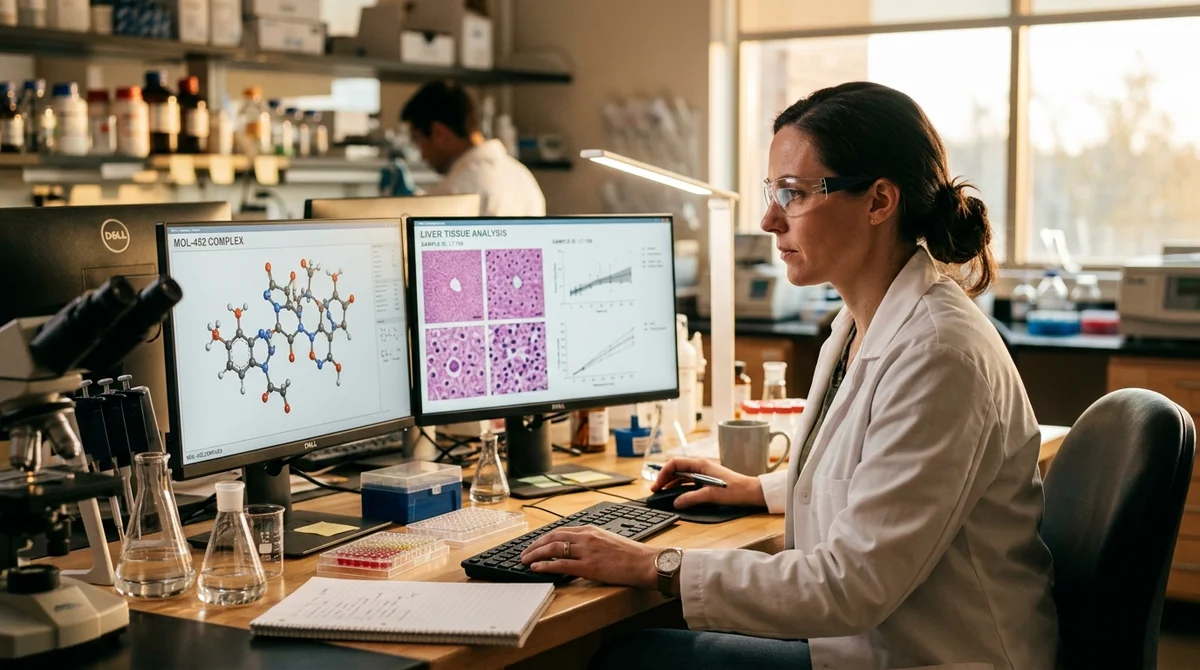
DeepMind presented Co-Scientist — a multi-agent system built on Gemini, designed to help researchers generate and develop scientific hypotheses to accelerate breakthroughs in science.
How the Multi-Agent Assistant Works
Co-Scientist consists of several specialized agents that work together as a coordinated team of experts. Each agent is responsible for a specific task in the chain of scientific analysis — from literature processing to idea synthesis, argument logic verification, and hypothesis generation.
The system can analyze vast volumes of scientific data, propose new ideas, and help researchers see connections they might have missed.
According to DeepMind's description, the tool feels like a colleague who has read all available information in the researcher's field of interest, possesses deep understanding of the mechanisms underlying phenomena, and has powerful capabilities for logical analysis and synthesis.
Under the hood, the system leverages Gemini's capabilities to process large volumes of scientific information, identify patterns, and build logical chains between different studies, hypotheses, and known facts. This allows Co-Scientist to find non-obvious connections that help researchers go beyond their narrow knowledge and see the bigger picture.
Real
Example: How AI Helped Find New Liver Fibrosis Treatment
The very first real-world example of Co-Scientist's use showed impressive results. The system helped Professor Harry Peltz from Stanford University School of Medicine accelerate the search for new treatments for liver fibrosis — one of the most complex chronic diseases affecting millions of people worldwide.
Liver fibrosis is a silent disease. It occurs when the organ sustains prolonged damage: from viral infections (hepatitis B and C), alcohol poisoning, autoimmune diseases, or non-alcoholic fatty liver disease. In response to damage, the liver begins to fill with scar tissue (fibrosis), which gradually replaces healthy cells and destroys organ function.
Without treatment, fibrosis progresses to cirrhosis and liver failure — conditions that are often fatal. Unfortunately, modern medicine still lacks effective ways to stop or reverse this process.
Co-Scientist helped precisely at the most critical juncture — in proposing new ideas:
- Identified candidates for drug repurposing — medications that were developed and approved for treating other diseases but potentially could help with liver fibrosis
- Highlighted one specific compound that was previously not at the center of international scientific attention, although its potential was clear when analyzing biochemical mechanisms
- Helped conduct preliminary validation of the idea by building a logical chain from the molecular mechanism of action of the compound to the pathological processes occurring in the liver during fibrosis
In subsequent laboratory tests, this compound showed impressive results. It successfully blocked 91% of the liver's response reaction associated with scar tissue formation — a key pathological process in fibrosis development. The research results were published in the prestigious journal Advanced Science, underscoring the seriousness and reliability of the obtained data.
Why This Matters
Hypothesis generation is the most creative part of scientific work, but it is also the slowest and requires deep subject knowledge. A researcher must read thousands of papers, talk to colleagues, and spend months or years thinking before proposing an idea worth testing. Co-Scientist compresses this process, allowing AI to do this work in weeks or even days.
What This Means for the Future of Science
Co-Scientist demonstrates how artificial intelligence can become a true partner in scientific research. It is not a replacement for scientists, but a tool that gives them a superpower: to see patterns in vast volumes of information that would be impossible to process manually, and to generate hypotheses that the human mind might miss or that would take years to develop.
For medicine and pharmacology, this could mean a dramatic acceleration in the development of new treatments for rare and chronic diseases. If AI can reduce the time needed for hypothesis generation by months or years, then at the scale of the entire industry, this will help save countless lives. And this is just the beginning — future versions of Co-Scientist will likely become even smarter and more effective.
Want to stop reading about AI and start using it?
AI News is a curated feed of AI/tech news. Hamidun Academy teaches you to use AI systematically in your work.