Softline cuts 7% of workforce and switches to robots instead of people
IT holding Softline immediately laid off 800 employees—more than 7% of its workforce. The company plans to replace their work with robots and AI algorithms, aut
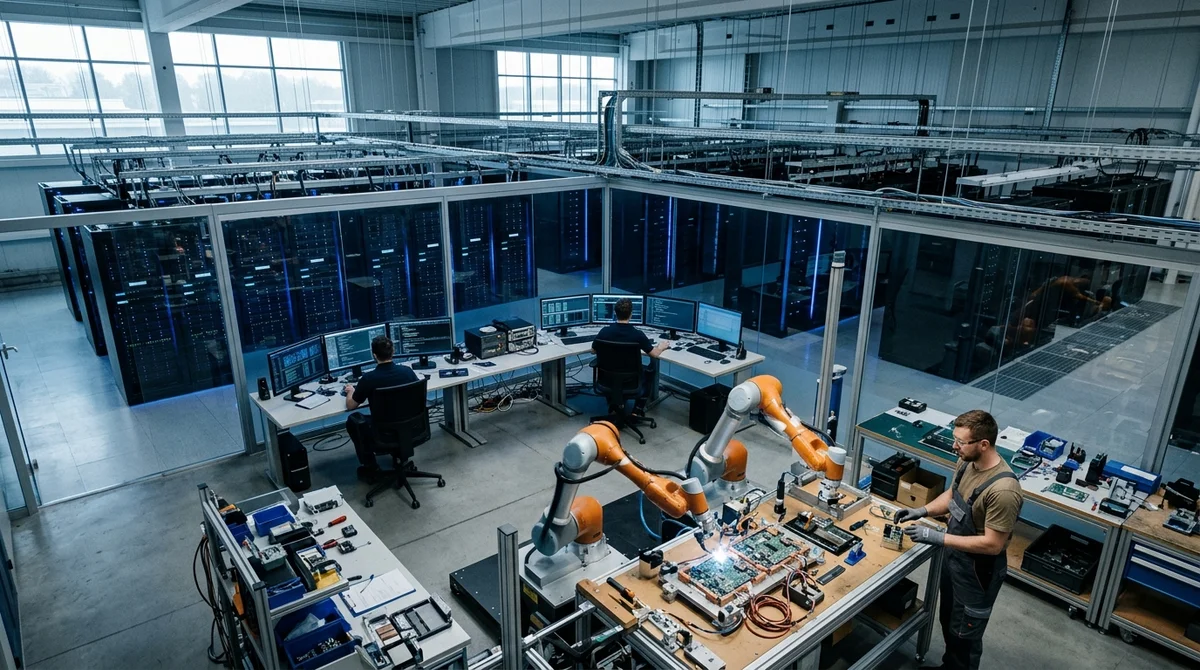
IT holding Softline laid off 800 employees in a matter of months, which amounted to over 7% of the company's total workforce. This is not simply cost-cutting — management announced that this is the first stage of a global automation program, and large waves of layoffs lie ahead.
First Wave of Layoffs
The reduction happened quickly and affected various departments. For a large company operating in distribution, integration, and IT services outsourcing, the loss of 800 people is a serious step. Softline is confident: these positions can be filled by technology cheaper and more efficiently. The company does not hide its goal: replacing jobs with robots and AI algorithms. This is happening against the backdrop of a severe shortage of IT personnel, when specialists are lacking even with rising salaries.
What Robots Do Instead of People
Softline is implementing automation in key areas:
- Document processing — invoice parsing, paper classification, data extraction
- Customer support — chatbots and AI for first-level assistance
- Warehouse management and logistics — robotic arms, automated picking systems
- Financial operations — calculation automation, payment verification, report generation
- Data analytics — pattern detection, report generation with recommendations
The holding is actively purchasing equipment and software from robotics suppliers. Within the company, a special team has been created to select the most effective solutions for each area. The speed of implementation is critical — the faster the systems work, the more positions can be cut.
Staff Shortage as Reason
At first glance, workforce reduction during a personnel crisis looks paradoxical. But Softline's logic is clear: Russia faces an acute shortage of IT specialists. Companies compete for the best developers and administrators, salaries are rising, but there are not enough people. The holding chose an alternative path. Instead of competing for employees, Softline invests in technology. Robots and AI work around the clock, don't take vacations, don't get sick, and don't require benefits packages. The economics of the approach are obvious.
"We see the future in technology, not in human resources" — such, apparently, is
Softline's new motto.
Will Layoff Waves Continue
Management made it clear: 800 laid-off employees is not the end. Further reductions will depend on the success of implementing new systems. If robots perform at a level of quality comparable to human labor, large-scale layoffs are inevitable. This is becoming a prototype of the future of Russian IT business. Large holdings, integrators, and outsourcing companies will face a choice: compete for rare specialists or invest in automation. Softline has already chosen.
What This Means
Softline becomes a case study of how technology solves a personnel crisis. For other Russian IT companies, this is both a signal and a challenge. If a large holding successfully replaces people with robots without loss of quality, this will trigger a wave of imitation. The paradox of the industry: with growing demand for IT services, demand for IT people may fall.