Meta unveiled four generations of custom MTIA AI chips for infrastructure scaling
Meta unveiled four generations of custom MTIA AI chips, developed over two years. The company is investing in proprietary processors to reduce costs for serving
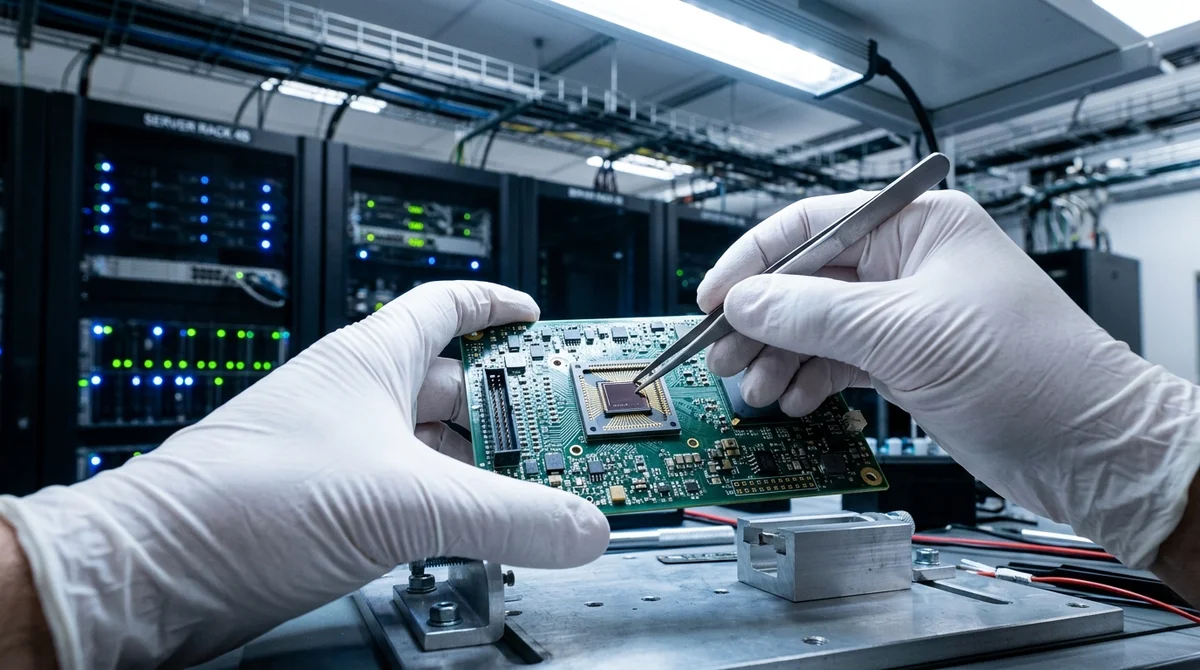
Meta announced four generations of proprietary AI chips MTIA developed over two years of development. The company is scaling its hardware stack to more cost-effectively service growing demand for AI models serving billions of users.
Why Meta develops its own chips
Meta, like other major AI companies, faces enormous infrastructure costs. Standard GPUs from NVIDIA are powerful, but expensive and not always optimal for Meta's specific tasks. When you're servicing recommendation systems for Facebook, Instagram, WhatsApp and scaling generative AI Llama, offshore processors quickly become a budget bottleneck. Proprietary chips enable the company several things. First, reduce the cost per chip per operation. Second, control the architecture and quickly adapt hardware to its needs without waiting for supplier updates. Third, avoid supply chain issues — when NVIDIA GPUs are in short supply, in-house production guarantees availability.
MTIA (Meta Training and Inference Accelerator) are specialized processors for working with models in both training and inference modes (running trained models). Over two years, Meta has released four generations of these chips, proving its engineering capability to compete in proprietary silicon development on par with giants like Google (TPU) and Apple (Neural Engine).
What the four generations of MTIA can do
Each generation brings improvements in performance, energy efficiency, and support for different types of workloads. Early versions focused primarily on inference — fast execution of already-trained models. New versions expanded support for training modes and integration with development tools like PyTorch and TensorFlow, which is critical for intended use.
The company constantly optimizes every aspect:
- Performance on linear algebra — critical for matrix operations in neural networks
- Energy efficiency — each watt of savings multiplies across billions of operations; energy savings = cost savings and reduced carbon footprint
- Architecture flexibility — support for different types of neural network models, from convolutional to transformers
- Infrastructure integration — ability to work with different data center topologies at Meta
What this gives Meta and its investments
The scale of use is enormous. Facebook and Instagram recommendation systems process petabytes of data daily. Models for content moderation, spam protection, personalization — all of this requires constant operation of millions of GPU-hours. Even a small reduction in per-chip cost is tens of millions of dollars per year for the company.
Proprietary chips allow Meta to not depend on NVIDIA supply disruptions, which have happened repeatedly in recent years. The company can accelerate the deployment of new capabilities — when you control both hardware and software, the development cycle shortens. This gives Meta a competitive advantage over competitors who depend on standard GPUs.
"Developing proprietary hardware is not a choice for a company of our
scale, but a necessity to control investment economics."
What this means for the entire industry
Developing proprietary AI chips is becoming a competitive advantage for large companies. Meta, Google, Apple, Amazon, Microsoft — all are investing in proprietary silicon. This is a sign that the industry is moving toward vertical integration: control over the full stack (software + hardware + data centers) is becoming a competitive advantage.
For startups and medium-sized companies, this complicates competition — if you don't have $10 billion to develop your own chip, you remain dependent on the open equipment market. But for consumers, this could turn out positive: cheaper and faster AI services thanks to optimization of the entire stack as a whole.
Meta is recognized as an extremist organization and is prohibited in the Russian Federation.