ECB Calls Banks to Emergency Meeting Over Claude Mythos Threats
The ECB urgently convenes European bankers for a meeting on Tuesday, concerned about the growing threat from new AI models. Tools like Claude Mythos from Anthro
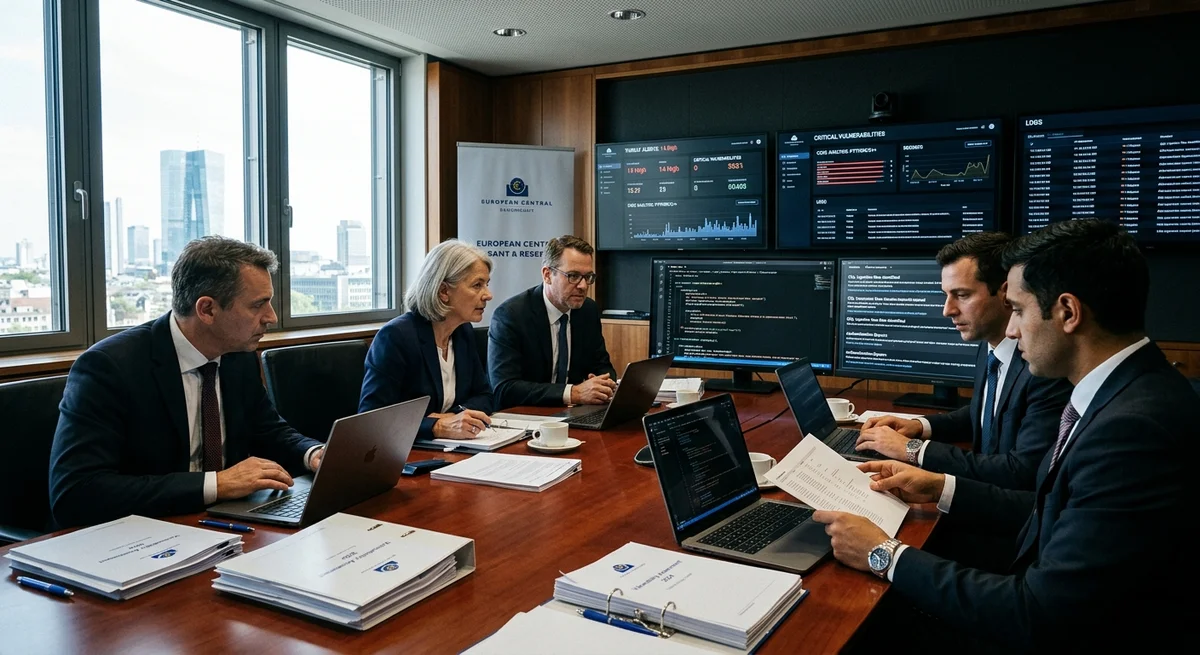
The European Central Bank is urgently convening a meeting with leading European banks on Tuesday to discuss critical cybersecurity concerns in the new era of artificial intelligence. The reason for the meeting is unprecedented: a new generation of AI models, including Claude from Anthropic, is demonstrating the ability to find and exploit critical vulnerabilities in financial systems at a speed unreachable by human security teams.
Wave of Panic in the Financial Sector
The ECB is convening the meeting after months of mounting concern triggered by Claude Mythos Preview — an advanced AI model from Anthropic that has sparked a wave of panic in the European financial community. This event represents the first serious indication that frontier AI models are already beginning to transcend research laboratories and actively impact the security of real critical infrastructure. While there are no official public statements about the compromise of specific banking systems, rumors about the possibility of using Claude for automated vulnerability discovery have spread rapidly among European financial institutions.
Representatives of banks and financial companies have begun approaching the ECB with a frantic series of questions about how to protect their critical systems in a situation where potential adversaries gain access to the same or even more powerful technology. The scale of concern is so great that regulators could no longer delay addressing the problem.
Why Next-Generation AI Models Are More Dangerous
Traditional vulnerability discovery tools operate according to clearly defined algorithms that can be anticipated. They search for known patterns and issues that people programmed them to find. In contrast, next-generation AI models leverage deep semantic understanding of source code and can identify problems that humans would miss. Claude's specific capabilities in vulnerability discovery include:
- Simultaneous analysis of millions of lines of source code in parallel
- Identification of subtle logical errors, race conditions, and memory management issues
- Creation of step-by-step exploit chains based on discovered problems
- Adaptation to defense mechanisms and development of workarounds for basic security measures
- Deep understanding of context, system architecture, and component interaction
For banks, where security is critical to every line of code, this represents an unprecedented challenge. If an adversary can use the same AI technology you use for defense, how is it possible to build an effective defense?
The First Practical Test of AI Regulation
The ECB meeting could become the first practical step in European regulation of AI in critical sectors. The discussion will focus on several critical questions: how to develop security standards that are resilient to attacks from AI models, whether banks should be required to use the same tools for active defense, whether entirely new requirements for architecture and isolation of critical systems are needed, and how regulators can control financial institutions' access to frontier AI models.
This is the first practical test of AI regulation in critical
infrastructure sectors.
Against the backdrop of a growing wave of AI regulation in the EU (Digital Services Act, AI Act), the ECB meeting could mark the beginning of a new direction — financial AI security.
What This Means
The ECB meeting symbolizes a turning point. Artificial intelligence has ceased to be merely a tool for developers and has become a concern for regulators in all critical sectors. For the financial sector, this means a complete reassessment of all approaches to security and system architecture. In the coming months, we will likely see new requirements for isolation of critical systems, mandatory testing for resilience against AI attacks, and strict restrictions on the use of frontier AI within financial organizations.