Honeywell to Split Into Three Companies: CEO on the Future of Automation and AI
Honeywell will split into three independent companies focused on different business areas. CEO Vimal Kapur discussed the role of automation and AI in corporate
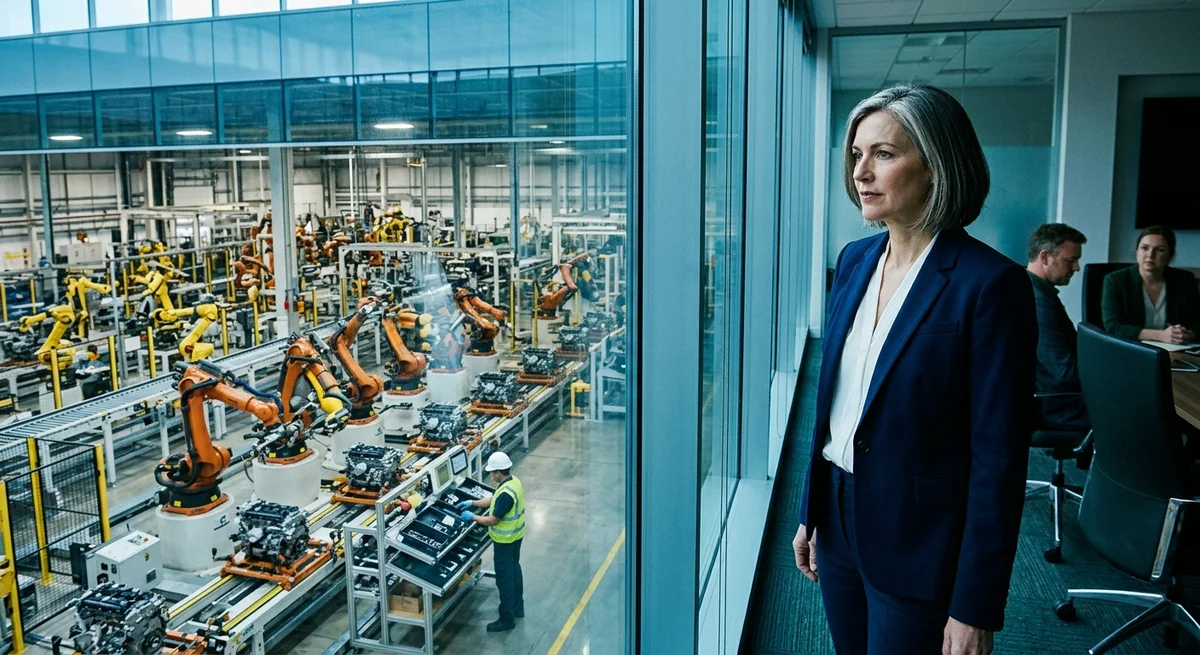
Honeywell, one of the world's largest industrial conglomerates, is preparing for a major restructuring. Chairman and CEO Vimal Kapur announced a plan to split the company into three independent entities, each focused on its own area of development. This decision reflects the company's new strategy in the era of automation and artificial intelligence.
Three Directions of Development
Honeywell's division is aimed at creating three specialized companies, each with a clear focus:
- Building automation and management — technologies for "smart" buildings, energy and climate management systems
- Aerospace technologies and engines — development of engines, aerospace equipment, and flight management systems
- Energy and sustainable development — renewable energy sources, energy storage, and eco-friendly solutions
Each company will be able to focus on its own market segment and respond faster to changes. The CEO explains that the unified structure of a large conglomerate slows decision-making, complicates innovation processes, and hinders adaptation to market challenges. The split will allow each division to develop its own strategy and innovation culture.
Automation as Core Strategy
Vimal Kapur emphasizes that automation and AI are not just technological trends, but a fundamental transformation of industry. Honeywell is already actively implementing these technologies across all divisions, from building management to production processes. Artificial intelligence allows the company to optimize supply chains, predict equipment failures before they occur, increase energy efficiency, and reduce operating costs. The company split will give each division greater flexibility in developing and implementing AI solutions tailored to the specifics of its niche. For example, the building management division will be able to focus on AI systems for optimizing microclimate, while the aerospace division will focus on predictive maintenance systems for engines.
Why Division Now
Honeywell's split reflects a global trend that is becoming increasingly obvious: large conglomerates are becoming less efficient in conditions of accelerated digitalization and the AI revolution. Smaller and more specialized companies respond better to innovation challenges, implement new technologies faster, and can attract investors focused on specific sectors. For investors, Honeywell's split means greater transparency. Instead of buying shares of a diversified conglomerate, they will be able to invest in pure plays of each segment. For employees, it means the opportunity to work in more flexible, innovative, and specialized structures, where their contribution is seen more clearly.
What This Means
Honeywell's split is a signal that industrial companies are actively transitioning to an AI-oriented economy. The success of this strategy will show how correct the decision to break up a large conglomerate is. But one thing is already clear: the future of industry belongs to companies that combine deep engineering knowledge with the flexibility to implement automation and AI. Those who adapt faster will win in the new market.