Persian Gulf submarine cables become bottleneck for AI
Hyperscalers demand Persian Gulf nations upgrade internet infrastructure. Submarine cables are constantly damaged by ship anchors and fishing nets. Bandwidth de
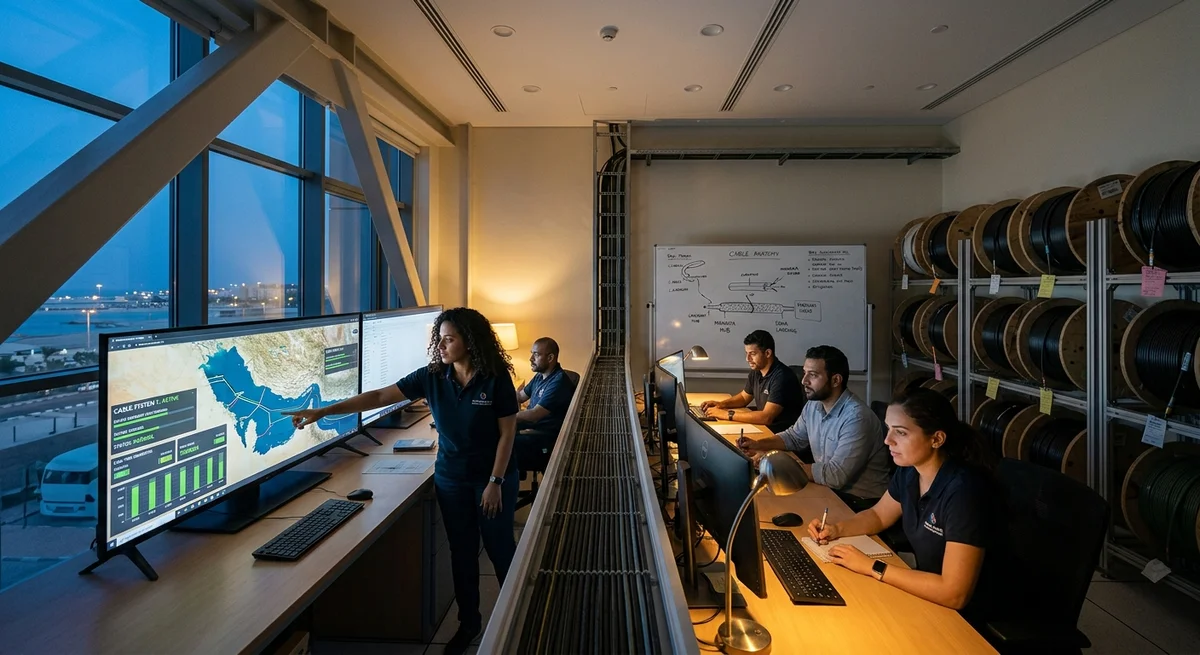
Hyperscalers are increasing investments in AI infrastructure in Persian Gulf countries, but have encountered a critical problem: submarine cables connecting the region to the world are constantly damaged and are becoming a bottleneck for the new economy.
Crisis of Aging Infrastructure
Submarine cables in the Persian Gulf repeatedly fail. Ship anchors, fishing net trawls, natural disasters like storms — all of this leads to cable breaks. In the past, this was a nuisance for telecom operators. But with the arrival of hyperscalers, the situation changed fundamentally. On average, tens of cable incidents occur each year. Recovery can take weeks. For a data center operating at full capacity, even an hour of downtime is critical — it means complete service failure for thousands of users.
Why AI Makes Everything Worse
AI data centers require unprecedented bandwidth. While previously the region's infrastructure was sufficient for banks and Internet providers, now even a single broken cable chain can paralyze the entire system. Imagine: you're managing a cloud platform for processing AI requests. Your main line is one or two cables. A cable break means complete service failure, reputation loss, and SLA penalty payments. Hyperscalers understand this and impose strict demands on governments: either the infrastructure is reliable, or they invest in another region.
What Hyperscalers Demand
The list of required upgrades is impressive:
- Protection of cables in vulnerable zones with special conduits and concealed routing
- Deployment of alternative routes for redundancy, so that a single break does not shut down the entire system
- Installation of modern monitoring systems capable of detecting problems in seconds
- Formation of specialized rapid-recovery teams (target response time — hours, not weeks)
- Changes to maritime law prohibiting anchoring near critical cable routes
The cost of modernization is staggering: a single kilometer of protected submarine cable costs between $30,000 and $100,000. Add monitoring, teams, and personnel training — the budget grows to billions.
Economic Pressure
Persian Gulf countries find themselves in a difficult position. On one hand, AI represents an opportunity for economic development and new investment. On the other, immediate, costly infrastructure modernization is required. There is no quick solution. Therefore, regions are aggressively taking action: negotiating with hyperscalers on joint financing, attracting foreign specialists, and accelerating the adoption of new regulations.
"Either we modernize our infrastructure, or we miss the wave of investments"
What This Means
The history of submarine cables in the Persian Gulf is symbolic for the entire world: digital infrastructure is now a strategic resource, no less important than oil or electricity. Countries that upgrade it will attract investment and secure positions in the AI economy. Those that hesitate will fall behind the wave of technological revolution.